Everyone's water, USAID, "Paquetes de familia"

Sudden rainstorms are intense here. This was a couple weeks ago, when the rain came from nowhere. You're actually seeing the car in front of us in one of the shallower parts of this dip.

The help-you-fill-out-your-visa-application-for-a-fee stand outside the embassy:

On the 29th we organized a screening of Part One of the Telesur documentary "Detrás del Golpe," ("En las Sombras") in Cinefilia. It was a pretty lame turnout effort: a facebook page that morning and calls to everyone in my phone book a couple hours beforehand, including Felix, who announced it on his program (after the event had begun). Despite that, the place was packed, and the response was fantastic. The filmmakers and the audience had a great conversation after the screening, and then we had to have a second screening because people kept coming in. They were anxious to see Part Two.

After the second screening of the documentary, while doing a phone interview with Jeremy Kryt (I was particularly pissed off at the State Department at the moment, as you can tell from the quotes) I saw a young friend outside smoking nervously. When I hung up, he explained to me "I had to leave the room. They were talking about things that I didn't want to hear."

Drug trafficking is so dangerous that even being in a room when other people are talking about it is too frightening for many Hondurans.

That night I crashed in a cheap hotel because of an early morning meeting downtown. In the morning I noticed that someone had done a pretty thorough job of painting over the graffiti on the Bulevar Morazán bridge and surroundings:

Oddly, they only seem to have missed the one that said "christ is of the people." Either they didn't get the liberation theology message, or the liberation theologists came after the whitewashers.

Further down the street, where the whitewashers hadn't been yet-
Micheletti, son of a thousand whores:

And some death porn from El Tiempo:
Executed and tied by their hands and feet

The same front page, juxtaposed with the back page, half a block down:

I admit, I had to retape the nice lady to the wall to get her in the picture. She was flapping about uncontrollably.

Exhausted, waiting for my 7:30 meeting (which actually started at something more like 9am), I got a call from Iranian radio and ended up doing a half-hour live interview with Suyapa Portillo and the host. It's been fascinating getting to know the various international media outlets with actual critical reporting—nothing like the straight-up propaganda in the U.S. Actually informed, intelligent hosts who don't cower when you critique neoliberal capital and U.S. military imperialism and don't appear to be, as far as I can tell, mouthpieces or pawns of governments or local oligarchies. They may be Venezuelan or Iranian or Jamaican (I also did a half-hour Radio Jamaica interview at 5:30am on the 29th, ouch), they may live in "anti-democratic regimes" (as if ours weren't—and I'm no fan of any government on principle), but they practice a critical, responsible, informed journalism that I have rarely seen in the U.S.

Outside, this wall was simply beautiful.

The Tribuna from the 21st, on the ground with trash, giving an important moral lesson...

...from one Alexis Mauricio Aguilar, who "prefers to search in the trash rather than steal."

A natural pharmacy:
Geriatrica Gorzove "Rejuvenece, Restituye la vista, Prolonga la vida sexual" ("Rejuvenates, restores eyesight, [and] prolongs sexual life")

...and Tlanchalagua is para obesidad; for obesity:

El Heraldo proclaimed dengue to be "out of control," promoting a militarized state of emergency that's doing nothing to mitigate the public health crisis but plenty to allow soldiers to stay on the streets and force themselves into anyone's home with the excuse of fumigation:

Later I met some young friends at one of the best (and oldest) baleada joints in town, Los Toneles. While I was waiting I entertained myself with a free Jesus quiz:

We talked about the power outage a couple weeks earlier. They said they'd been at a dinner party with a bunch of people who they didn't know well. As usual among people who don't know each other well, they had avoided the theme of politics. But with the panic that overcame everyone with the lights out, and the fears of a new military takeover, it became immediately clear to everyone, and to everyone's delight, that they were all resistance. So despite the fear that they were experience, the mutual recognition that occured at that moment was something they recalled with pleasure.

The previous week I was going to walk to the pharmacy from the university to get some antibiotics for my strep throat (I love not having to deal with the bureaucratic control of doctors). I asked directions and was told the pharmacy was just down a little bit, past that light. I said "Oh, so I can just walk, then." The young man I was speaking with looked at me as if I were a little bit crazy and said, "si se atreve," "If you dare"—making it quite clear he wouldn't. And of course, as I thought about it, I know of at least one person (Teto) who was violently attacked by a group of young men, who chased him while he was walking from the university one day.

On another day I asked a 6 year old if he sings songs in his one-room schoolhouse (with all 6 grades). He answered: "the only song we get to sing is a stupid song about god every day." His atheist mother laughs, telling me that's the national anthem.

I met a group of young people from the Sierra Service Project. Seemed like a really good service project (despite my aversion to "service" vs. solidarity). Only realized later it was a mission group. Of course they fit the profile—a bunch of eager, young sincere middle/upper-middle class blond people, gender skewing feminine. That said, I met them in COFADEH, and they had more of a Habitat for Humanity that Soul Harvester feel to them. It's important to recognize the distinctions: there is Stalinist resistance, anarchist resistance, organized and spontaneous resistance, unarmed, non-violent (whatever that means) and wanting-to-arm resistance; there are crazy UCD golpistas, there are unorganized golpistas, there are media-brainwashed golpistas, and there are soldiers who rape women protesters and the politicians and religious figures who support them; there is Opus Dei and there are liberation theology Jesuits and militant laypeople; and there are evil U.S. missionaries and other U.S. missionaries, there is Franklin Graham taking advantage of Hurricane Mitch and then there are Methodist Liberals who care about human rights.

There in the office, I spoke with a young man who told me a story he said he'd never told anyone. One day, he said, he had been planning to commit suicide. He had thought it through, and he didn't have a gun, so that wasn't an option. He would have jumped out of a window but Tegucigalpa doesn't have any buildings that are high enough, and he was afraid of ending up alive and crippled. So he decided to OD. He was on the phone, saying goodbye to a friend (it would have been too much to say goodbye to his family, he loved them but he couldn't face them). He was crying, his friend was trying to talk him out of it, he was undone, when suddenly someone put a gun to his head and demanded all his money. He turned everything over, and when the assailant left, he realized he had no desire whatsoever to die, and hadn't been suicidal since.

Also at COFADEH, Meri and I got to talking about Walter Tróchez with a couple other women who'd known him. They were laughing at how careless he'd been, in the way you laugh at things that would kill you with sorrow if you didn't laugh. She had given him a huge scolding two days before he was killed, because less than a week after being kidnapped, interrogated and tortured by the de facto police/military, he wanted to go out partying after curfew.

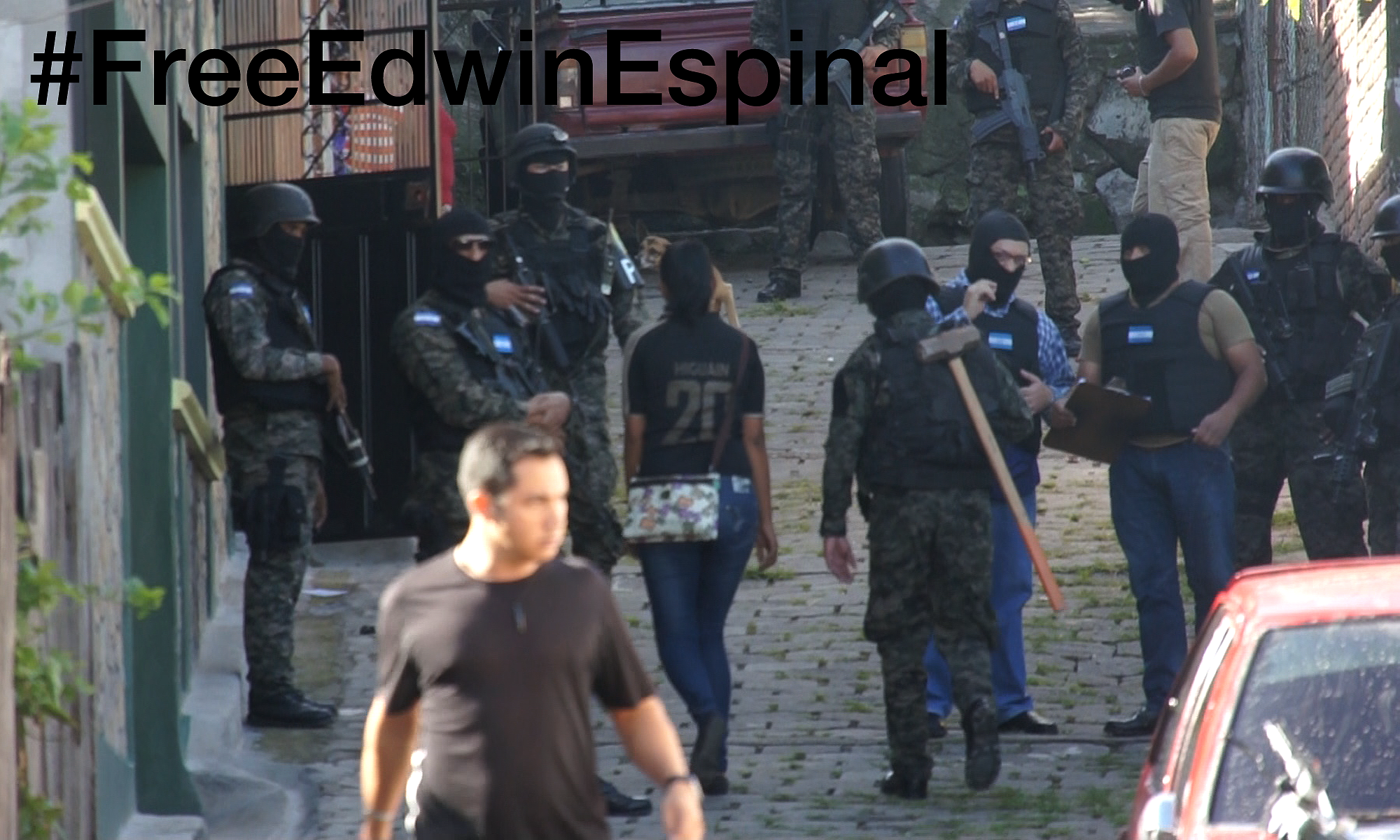
Edwin, who I'd seen the day before, had been to the doctor, and she'd had to leave in the middle of his visit because more than 12 hours after the police had sprayed pepper gas directly into his eyes and mouth, the residue was so strong that it affected her. Although he'd requested a protective order from the public ministry against the police, they'd gone over to his house to mock him.

One evening, I met a U.N. employee who was particularly interested in making sure I know about how his daughter had just gotten a masters in business administration in Washington state and his sons had studied in the U.S., and he and his wife had been so well received there, and he could travel whenever he wanted. He offered to give me a ride from point A to point B. He told me things were getting back to normal, after last year. The problem, he said, was that the previous government had been so corrupt. I asked which government he meant. The one that they kicked out, he said, because there was so much corruption and lawbreaking. But, I said, I heard there had been a lot of corruption in the government that followed...who was it, Micheletti? He explained that while there may have been unos pícaros por ahí, the important thing was that now Honduras was on the right path, away from Chavez. I nodded, wondering how far I could push him. "It's true, I said, when there are accusations of corruption, one shouldn't worry about things like democracy and legal process, right?" "EXACTO," he said, apparently glad I got it.

...the Honduras team played a piss-poor set of matches, losing all of them handily. This was exacerbated by the fact that two of the best players, David Suazo and Rambo Leon, were sidelined. While it was said that both were injured, the widespread rumor was that Rambo had planned to dedicate his first goal to the resistance movement.

David Suazo—whose two-story house I was once driven past in the poor Ciudad Satelite outside San Pedro on a tour by friends from neighboring Lima of local boys-make-good—despite not playing, is plastered all over town on billboards marketing the ironic Aguazul campaign claiming it is "El Agua de Todos"

In this earlier Aguazul campaign with David Suazo, we see that Guillermo Anderson had sold off his ecological ideals well before he turned golpista:

This is of course particularly ironic at a time when water privatization and the marketing of water sources to international corporations (illegal according to the constitution, itself of course entirely a joke by now) has been a central element of the coup regime, and when Áfrico Madrid took advantage of the World Cup to make it even easier for internationals to buy off water rights in Honduras.

That Thursday I spoke with a young engineer from the United States working for a water volunteer project. He said that there was no water infrastructure in the country except for that which was funded by foreign funds, external funds, like the cooperación española. In the middle of a drought year there had been no new water projects, because all the funding was cut off because of the coup. He observed to me how pervasive the coup was. "It comes up in any meeting, anywhere." It's inevitable, since the entire water infrastructure (not to mention industry) depends on neoliberal finance, with no democratic accountability. The young man told me about how he participated in a small protest of gringos outside the U.S. embassy on the day of the November elections, 10 people or so. It gave him some satisfaction, since he felt he had to so something, but he had to leave after a bit so he wouldn't get caught in photos of the action.

Earlier on the day that I spoke with the engineer, I met a woman whose whole family was under attack, as part of the Lobo-era strategy of collective punishment, "un paquete de familia," as a human rights advocate called it. She had been an assistant to a member of the Zelaya government within one of the state organizations, and had been fired for her position within the organization after the coup because of her "anti-democratic" activities—marching with the coup. She showed me the notes she took at her dismissal hearing. In this section, she documented their claim that on August 12, 2009 she took part in the street marches against the alleged coup d'etat supporting the popular movement called the resistance shouting "we must not recognize the coup government"...

The letter announcing her dismissal read in part:

This decision is taken in response to the fact that for more than two months you have been participating in propaganda actions against the democratic institutions created by the Constitution of the Republic while at work; and with such actions failing to comply with the duties that all workers must observe in the execution of their job, which constitutes a grave violation of the worker's duties and of banned activities.

Two weeks before I spoke with her, her favorite cousin, a radio show host, was shot five times in the head and back by a tall, think dark-skinned man wearing all black with a black chumpa (bulky jacket) upon leaving his broadcasting studio in Colonia Kennedy. A neighbor came out while the assailant was still shooting, and along with other neighbors called an ambulance. Nothing was taken from him in the assault. One of the shots was from under his chin, up through his mouth and face, and another was lodged in his neck, another just by his spine. Miraculously, he survived, and was being treated in an undisclosed (to you) location. It was L19,000 for surgery, and if you didn't pay up front, they won't do it. When she went to ask about him in forensic medicine, she had first been delayed for hours, almost as if they were mocking her. She had set up a system whereby someone from the family was always there to try to prevent them from finding and killing him. She had been bringing food to all the security workers at the hospital so they would let her through to see her cousin, who although his face was shattered and he couldn't talk, was able to communicate through writing. Her sons said to her, "Mamá no vaya a poner denuncias si las de no sirven para nada mejor compremos arma"—"Mom, don't report it to the police, that won't do any good, we should buy a gun instead." She told me "si en mi familia nunca hemos tenido arma nunca pensé escuchar eso en mi familia"—"In my family we have never had a weapon; I never expected to hear something like that from my family."

Her sons had been beaten during the marches, after the terrifying events at the Chochi Sosa stadium last September, her older son (a med school student) until he vomited blood. He had thrown his body over that of his younger brother so that he would receive the bulk of the blows.

Her house, in a mountainous area outside Tegucigalpa, had been broken into and left in shambles, but the only thing they took was her laptop, and they taped a communique from the UPM on her fridge. She knew damn well it was the authorities who had done it- did they think she was stupid? They had called her all sorts of names: "La compinche de los delincuentes," "cuatrera" (translated as "treacherous" "disloyal" and "cattle rustler" but also used in contemptuous reference to supporters of the cuarta urna—the vote on a constituent assembly), "respública," etc. "te vamos a matar," she had been told, straight up, by the police. A local policeman had put a gun to her head in response to her resistance activities, and she went to file a complaint at the station, and it was after that that the attacks on her house started. She had had to install metal bars around her house, and finally moved out. She was renting downtown while her own house sat vacant, and after decades of a solid middle-class existence, she was barely getting by. "Yo nunca me había sentido como indigente que a veces, ni comer." She admitted to me that since the coup she has gone through serious depressive phases (etapas depresivas).

At home, in her family, they have been trying to hold together, but the repressive forces are doing everything they can to destroy families ("están desintegrando familias"). She'd already experienced that in a different way with Hurricane Mitch, when her house was destroyed. She had had a wonderful husband, a really great man, but "se pierde la casa también se pierde el hogar." The loss of their home put too much pressure on the relationship and he ended up leaving, going with another woman. And her family was already a mixed bag- a brother and a cousin work with Miguel Facussé.

"Mis hijos, a mi me da miedo que podrían cometer violencia porque están tan llenos de indignación"—"I am afraid that my sons could commit an act of violence because they are so full of indignation."

From June 25th, I can't remember if it was El Tiempo or El Heraldo (La Prensa?)...hopefully I still have the original somewhere. In any case, these contiguous ads sort of, well, jumped off the page like a cachureco State Department hospital executive Freddy Krueger. On the right, a special mass in honor of the founder of Opus Dei:

And on the left, a "Management Sciences for Health" program funded by USAID in an era of Emergency Medicine (Lobo's militarizing States of Emergency, Emergency instead of preventive care, Public sector Emergency as an excuse for this kind of privatizing bullshit).
Requirements:

  • Experiences in processes of decentralization of public services
  • Ample knowledge of processes and procedures of USAID and/or other international donors